OMODA 5 review
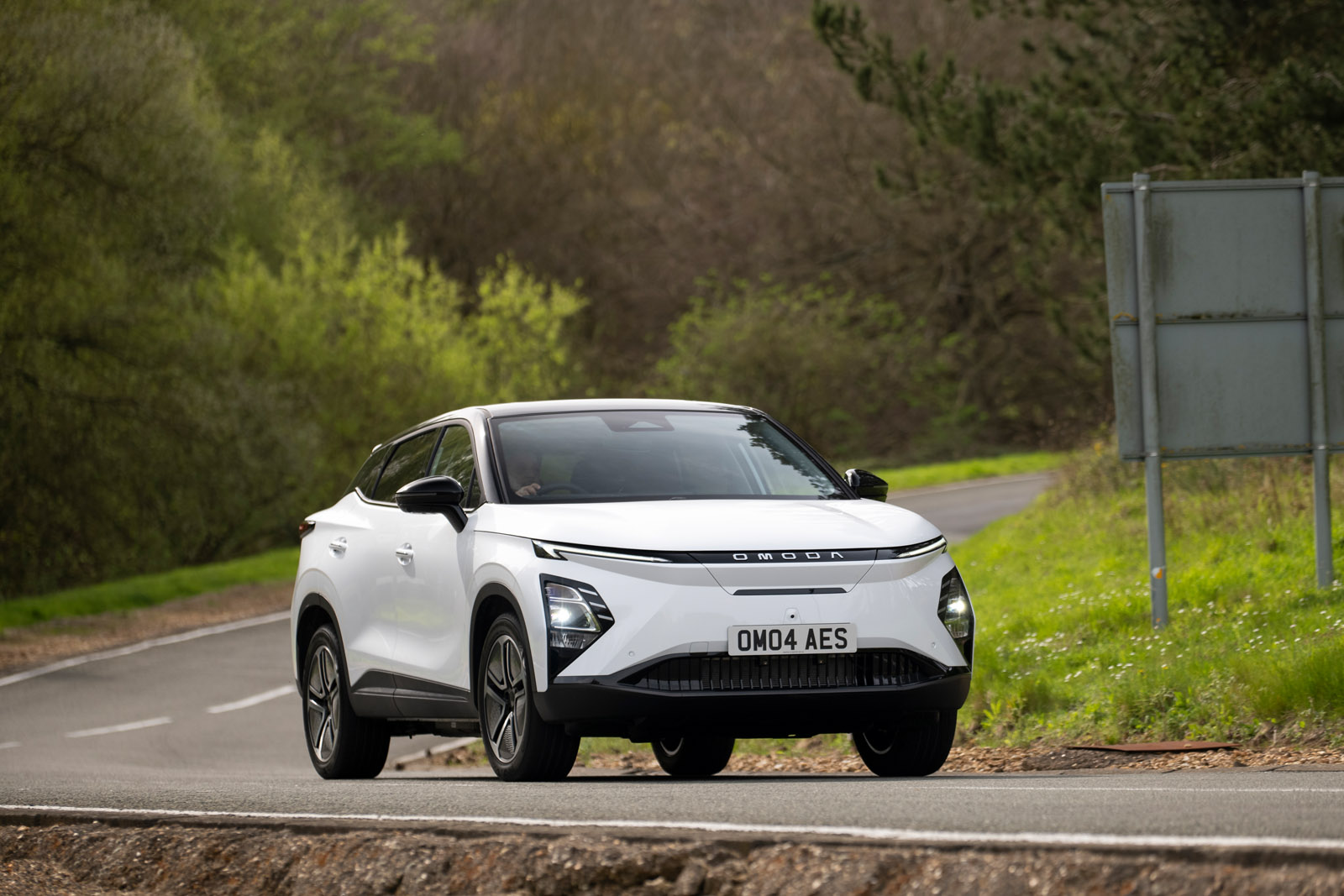
The OMODA 5 is a relative newcomer that hit the UK by storm thanks to its appealing pricing and impressive tech. Having had a number of improvements and a truly impressive hybrid, it’s better than ever. So, is it a crossover worth buying? Read our OMODA 5 review to find out.

)
Pros
- Consistently good hybrid
- Two strong trim level options
- Can feel fun to drive
Cons
- Rivals pip it in boot space
- Petrol engine isn’t cheap to run
Interior
Our rating: 8/10
Driving position
The OMODA 5 offers a slightly sportier seating position compared with the bigger ‘7’ and ‘9’, thanks to a coupé-inspired roofline and a relatively low dashboard.
It feels more like a Hyundai Kona or Ford Puma than a Kia Sportage or Hyundai Tucson, which is good if you’re after a slightly raised driving position but don’t want to forgo an engaging feel.
Driver visibility is generally pretty good, with slim A-pillars (between the windscreen and the front doors).
Rearward visibility takes a slight hit due to the raking roofline, which causes the rear windscreen to be narrow, but cars like the Tesla Model Y are much worse.
In terms of the seating position itself, adjustment is average, though we do wish the seat could go lower and the steering wheel could reach out further.
We love the wraparound cockpit you get in the OMODA 5, which adds to the sporty feel and distracts from the fact the seat can feel a touch higher than you may like.
Tech and features
OMODA 5 trim levels
– Knight
– Noble
The OMODA 5 launched in 2024 with an already excellent standard fitting of tech, but the company responded promptly to customer feedback and issued an update around a year into production.
Earlier versions have 10.25-inch screens, while the newer versions have twin-12.25-inch screens that are curved, and slightly angled towards the driver.
The operating system itself is good, and it covers all the core functionalities you’d need, but wireless Apple CarPlay/Android Auto gives you access to smartphone mirroring anyway, so you're unlikely to use the car’s apps.
Base-spec Knight cars get heated front seats, keyless entry, a reversing camera and fast 50W ventilated wireless phone charging.
If you want to upgrade to Noble, you’ll also get a powered sunroof, a heated steering wheel, cooled front seats, an eight-speaker Sony sound system and a 540-degree parking camera. If you like the finer things in life, this is certainly the trim to choose.
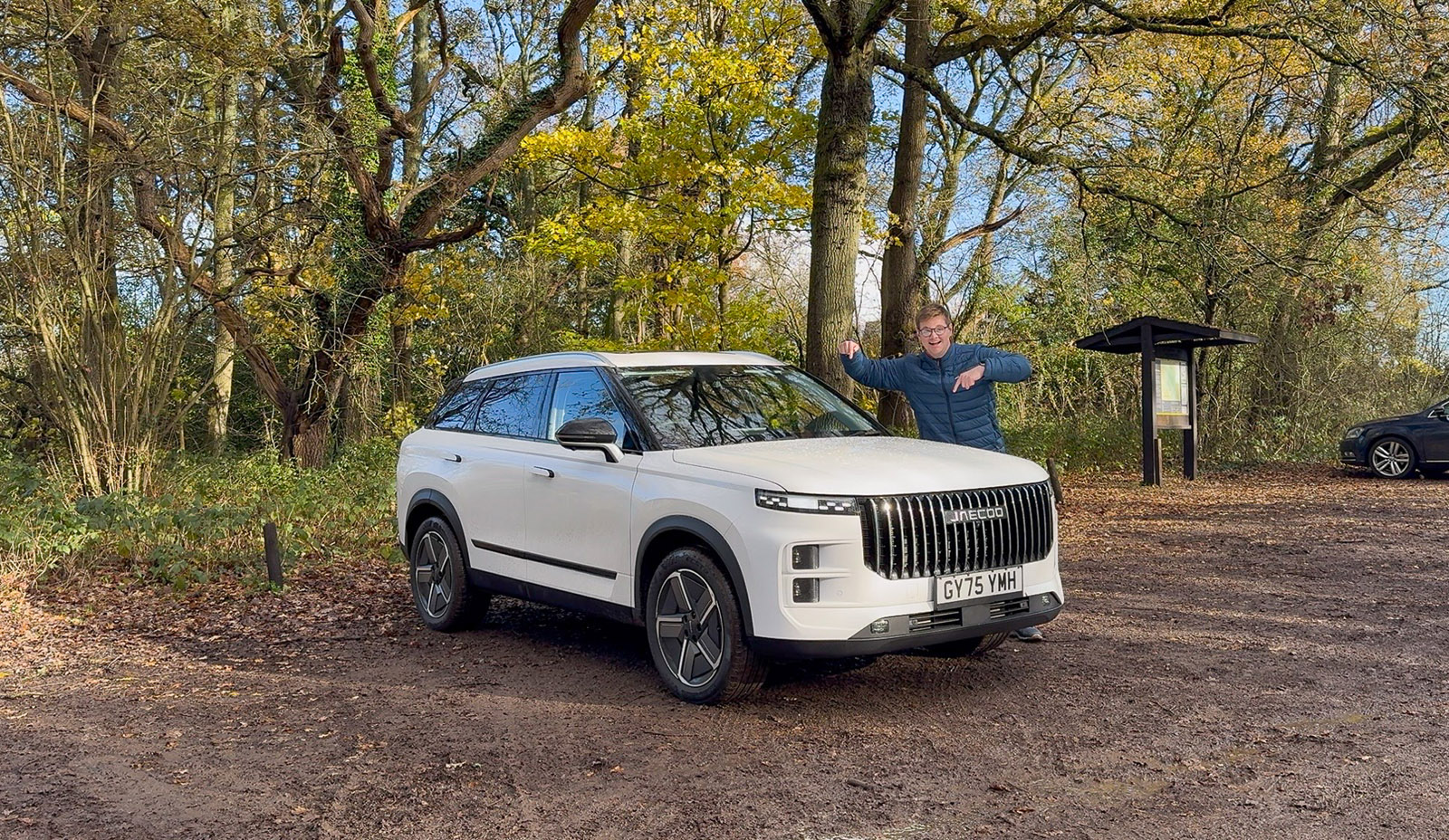
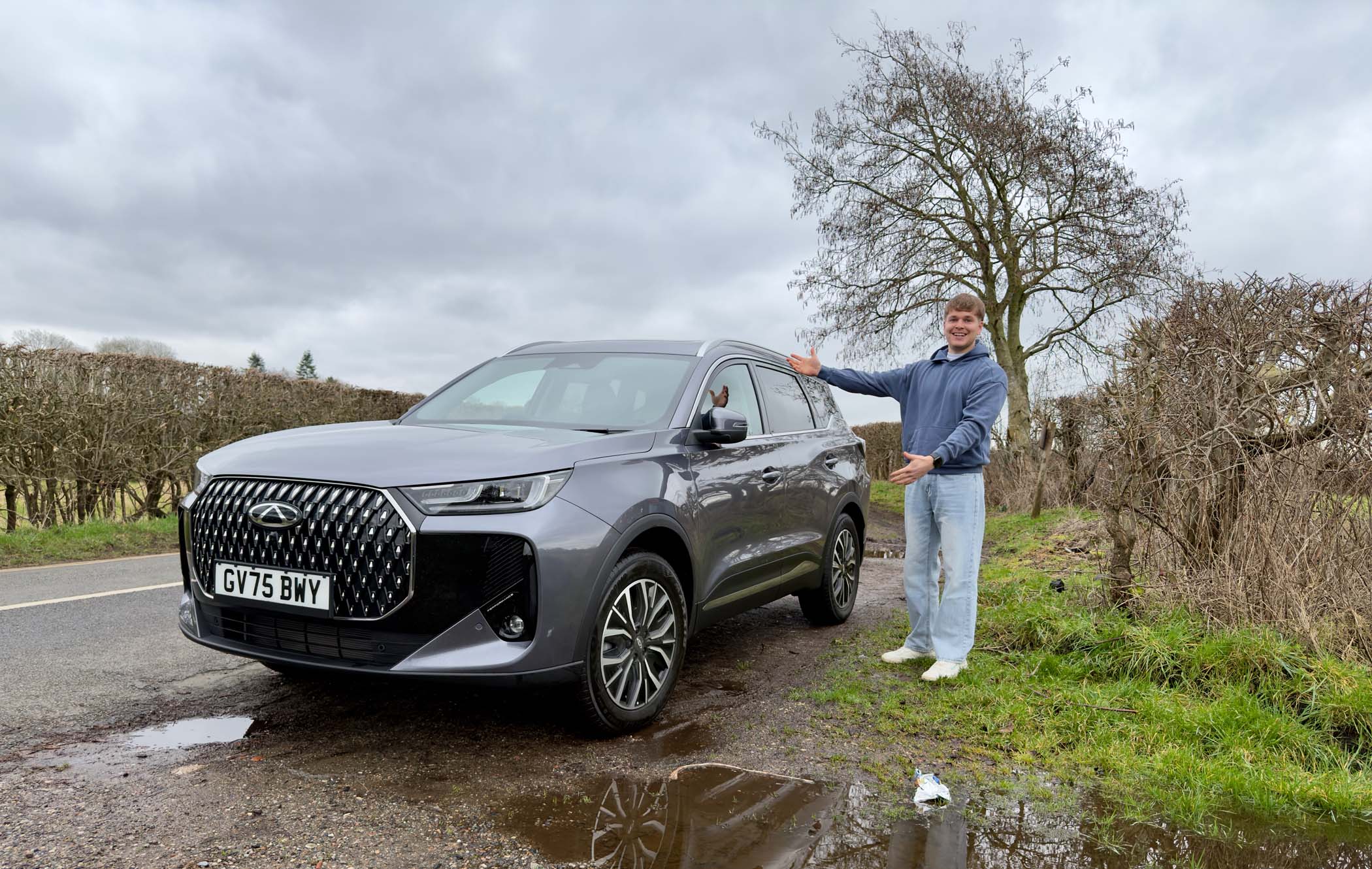
It’s a very similar story to sister companies JAECOO and Chery, but compared with more established rivals, you get a lot of tech for not as much money, which is the key selling point of any OMODA.
Performance
Our rating: 8/10
Engines and power
OMODA 5 performance stats
– Power: 147 to 224hp
– 0-62mph: 7.9 to 10.1 seconds
– Top speed: Up to 121mph
– Driven wheels: Front-wheel drive
The OMODA 5 was first available as a petrol model, pairing a 1.6-litre turbocharged petrol engine with a seven-speed dual-clutch automatic gearbox (like VW’s DSG).
With 147hp on tap, it’s got enough poke to get you up to speed on the motorway, and it rarely feels slow around town.
For a petrol model, then, it’s the perfect balance.
However, fuel economy was never this engine’s strong point (more on that below), so buyers were given the choice of the electric OMODA E5 (which we’ve reviewed separately).
In 2026, though, OMODA launched the 5 SHS-H – a self-charging hybrid model.
It’s quicker to 62mph (7.9 seconds) than the petrol (10.1 seconds) and feels better to drive.
It wouldn’t be 2026 without a dose of AI, and OMODA says the 5 SHS-H has AI energy flow switching – in other words, the car uses artificial intelligence to determine the best power source. Clever stuff.
Electric is used for slower and medium speeds, where the engine may sometimes kick in to charge the battery.
At higher speeds, it can be more efficient for the petrol motor to power the wheels directly.
None of this matters, though, because the 1DHT transmission means it feels the same to drive all the time.
It’s a newer type of gearbox, but think of it as being similar to a CVT – changes between gears or power sources are indetectable, and the engine only really starts to become vocal under harsh acceleration.
It’s a similar setup to other emerging brand hybrids, like the BYD SEALION 5 DM-i, and feels effortless to drive.
If pushed to pick between the OMODA 5 range, we would probably pick the OMODA 5 SHS-H because of the way it drives.
Handling and ride comfort
Don’t think of this as a big, cumbersome SUV. It’s far more planted and stable than that, and can feel nearly as enjoyable in the backroads as the smaller Ford Puma.
Despite coming from the smooth streets of China, OMODA is proud of its European R&D centre, which means the ‘5’ feels well-tuned to the UK’s more bumpy roads.
While the bigger OMODA 7 is clearly geared more for slower town speeds and comfort, dare we say the ‘5’ feels more ‘youthful’ – but then again, it’s probably targeting younger buyers who are likely to drive more enthusiastically.
Practicality
Our rating: 7/10
Boot space
OMODA 5 boot space
– Boot space: 370 to 380 litres
Boot space is 380 litres for the petrol model, or 370 litres for the self-charging hybrid version – so there’s not a lot in it.
This is about on par with family hatchbacks, so if you’re upgrading to a crossover for the first time, you shouldn’t see much of a difference in terms of practicality.
Compared with most other crossovers and small SUVs, it might come out on the smaller end, but the wide aperture of the boot opening and flat floor means it’s a truly usable space.
A powered tailgate is also available on the top trim level.
Rear seats
This is another area where the O5 feels more hatchback-like than SUV-like, because rear space is good but not huge.
Legroom is adequate, even for adults, but headroom is slightly reduced because of the coupé-like roofline.
In terms of comfort, the actual seats are supportive, and you could easily do a long trip in the back of an OMODA 5 without major complaints.
Storage solutions
This is a pretty practical car, designed to cater to young and growing families, so you get the usual phone trays, cupholders and other in-car storage.
The door bins are useful for keeping bottles out of the way, and the glovebox is a good size. There’s nothing insanely class-leading in here, but it does everything you’d expect of it.
OMODA 5 dimensions
– Height: 1,588mm
– Width: 1,824mm (excl. door mirrors)
– Length: 4,373 to 4,447mm
Safety
The OMODA 5 has already achieved a five-star Euro NCAP safety rating, but that hasn’t stopped the Chery-owned brand from improving things with regular updates.
Key driver assistance features include adaptive cruise control with traffic jam assist, blind-spot monitoring, lane departure warning and autonomous emergency braking.
The car also includes a total of 11 airbags, including a centre airbag designed to prevent occupants from bumping into each other in the event of a collision.
This is a class where five-star ratings aren’t a given, so credit to OMODA for putting the work in to create a very safe crossover.
Running costs
Our rating: 8/10
Fuel economy
The petrol model won't be celebrated for its fuel economy. The 1.6 gets a claimed 31mpg.
The petrol engine is a pretty simple one, whereas many rivals have now started to use mild hybrid to reduce emissions and improve fuel economy.
Step in the newer self-charging hybrid ‘SHS-H’ model, with its 1.83kWh battery, and OMODA suggests around 53mpg could be possible. We were able to exceed this in our testing.
Both have the same 51-litre tank, so the OMODA 5 SHS-H should be able to go a lot further between fills – over 650 miles, in fact.
Reliability
Don’t be put off by the fact that OMODA’s still an emerging brand in the UK, because it belongs to parent company Chery – a Chinese manufacturer that’s got a proven track record in its home country.
But if you’re still unsure, the brand backs the car with a seven-year/100,000-mile warranty and a separate eight-year cover for the hybrid’s battery.
The verdict
Interior
8/10
Performance
8/10
Practicality
7/10
Running costs
8/10
In essence, the OMODA 5 is a compact crossover that feels genuinely good to drive, where many rivals can feel slightly dull behind the wheel.
Sure, it’s not the sportiest car you can drive, but the suspension delivers on ride quality and power delivery is generally smooth, which is what you’re buying an SUV like this for.
With it, you get effortless power delivery, the highest power output (224hp) of any OMODA 5/E5 model, and genuinely high, attainable MPG figures.
If you’re after an affordable and well-put-together SUV, the OMODA 5 should be on your shortlist.
Similar to the review