BYD SEAL review
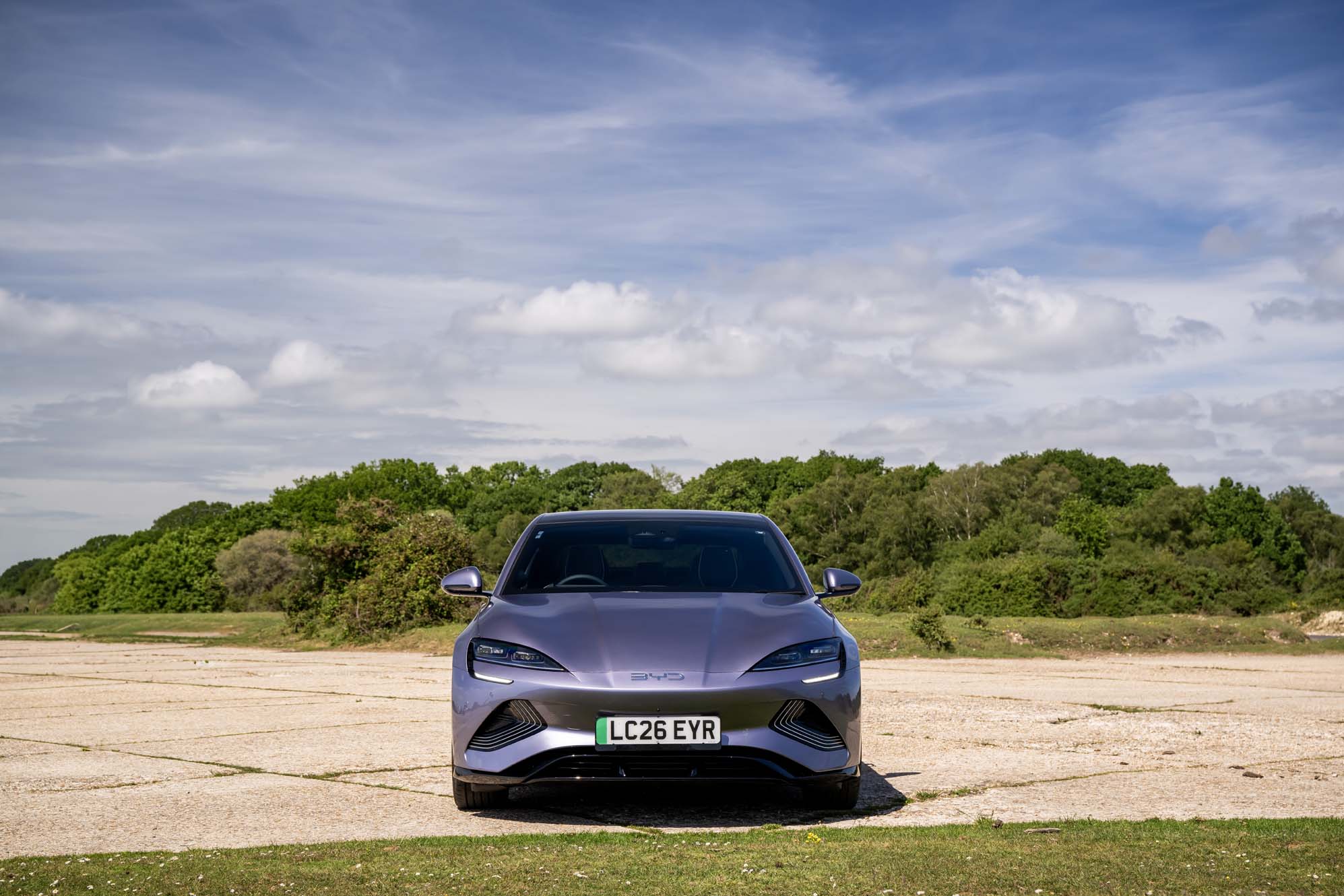
The BYD SEAL is an electric saloon that comes with a huge battery, advanced tech and enough power to embarrass most other cars on the road. A 2026 upgrade improved things even more, boosting luggage capacity much closer to its competition. Read our full BYD SEAL review to find out whether you should get one instead of a Tesla Model 3.

)
Pros
- Brisk performance
- Useful 300-mile range
- Big boot
Cons
- Less efficient than some rivals
- 150kW charging isn’t game-changing
Interior
Our rating: 8/10
Driving position
Sitting in the SEAL starts with the seats themselves, and as you’d expect from a sporty saloon, they go suitably low. Probably lower than a Tesla Model 3, its main rival – but there’s enough vertical adjustment if you prefer to sit higher up, too.
In terms of actual support, the sculpted seats do much more than hold you in when you’re driving enthusiastically – they’re supremely comfortable, and make longer motorway trips feel far less of a chore.
Forward and side visibility is good, but rear visibility is a bit of a pinch because the rear windscreen is pretty narrow. Not quite as letterbox-y as the Model 3’s, but not as good as a hatchback like the VW ID.3.
All models also get heated and ventilated front seats, and a heated steering wheel, so BYD’s got your back when it comes to comfort.
Tech and features
BYD SEAL
– Design
– Excellence AWD
While there are technically two trim levels on offer, they’re more about the powertrain upgrades (more on that below) than the features, and there’s virtually nothing to separate the two.
Standard kit across the range includes those premium leather seats, dual-zone climate control with a PM.5 filter, a 10.25-inch digital driver’s display, a 15.6-inch central touchscreen (with Apple CarPlay/Android Auto) and, for top-spec models only, a head-up display.
You’re covered on the charging front, with an 18W USB-C port and a 60W USB-C port up front, and exactly the same at the back. Twin 15W wireless charging pads also complete the setup up front.
As for driver aids, you’ve got all-round parking sensors, a 360-degree parking camera, adaptive cruise control, lane keep assist and a long enough list of mandatory safety kit.
A big shoutout to BYD on the EV-specific tech, too, because the SEAL comes from factory with an efficiency-boosting heat pump to warm the cabin in the winter and vehicle-to-load (V2L), which lets you power external appliances via an adapter plugged into the charging port.
Performance
Our rating: 9/10
Electric motors and power
BYD SEAL performance stats
– Power: 310hp or 530hp
– 0-62mph: 3.8 to 5.9 seconds
– Top speed: Up to 111mph
– Driven wheels: Rear-wheel drive (RWD) or all-wheel drive (AWD)
There are only two motor configurations, but they’re serious heavy -hitters. That’s what the trim levels mostly denote, with Design optioned with a 312hp motor and Excellence AWD getting a 530hp, twin-motor setup.
Even the slowest version is brisk, with a 0-62mph time of 5.9 seconds, which is enough to keep any pesky hot hatch at bay.
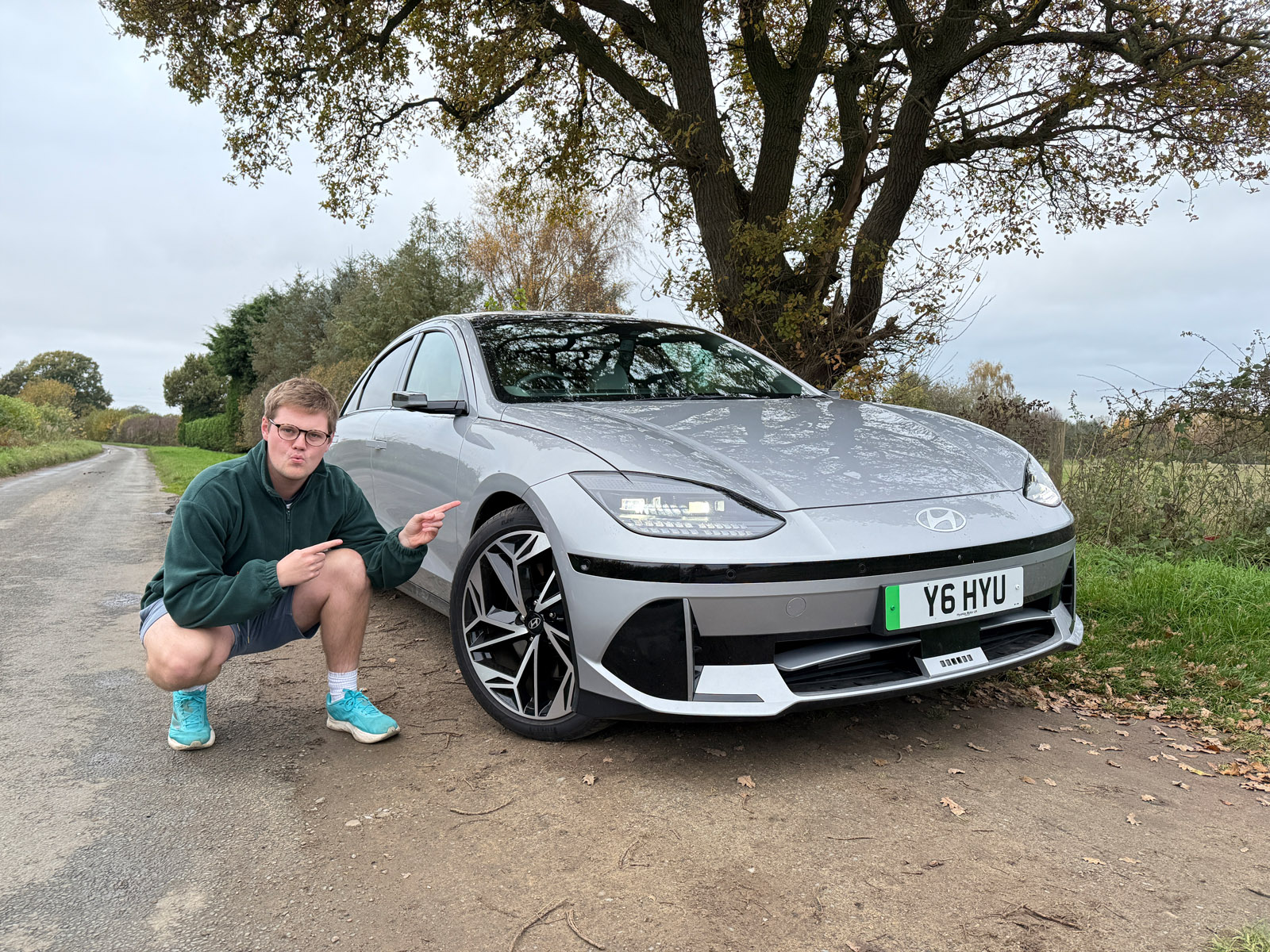
It’s about in line with the Tesla Model 3, Polestar 2 and BMW i4, and quicker than the Hyundai IONIQ 6.
An additional motor on the front axle gives the AWD model a 0-62mph time of 3.8 seconds, and it feels suitably quick.
Handling and ride comfort
Power delivery generally feels pretty smooth, though it can sometimes feel like there’s a split-second delay both during throttle-on and throttle-off in some of the more comfort-oriented drive modes. Sport mode sharpens things up a little bit more.
In terms of handling, BYD’s e-Platform 3.0 integrates the battery into the car’s structure itself, so everything feels taut as it should.
A low centre of gravity, near-even weight distribution and either fully rear-wheel drive or a rear-biased all-wheel drive make it feel better than you might expect for a family saloon to drive.
If you’re looking for something sportier with more accurate steering, though, you may wish to consider the BMW i4 or, to a lesser degree, the Tesla Model 3.
At higher speeds, the SEAL feels settled and comfortable, but nasty postholes can feel unpleasant over the front axle and poor surfaces make it feel slightly more fidgety than rivals. On the whole, it’s average around town and slightly above average at speed.
Practicality
Our rating: 7/10
Boot space
BYD SEAL boot space:
– Boot space: 400 to 485 litres
– Front boot: 53 to 72 litres
The BYD SEAL started life with a 400-litre boot, which was never particularly impressive. It’s less than the i4 (470 litres) and about on-par with the Polestar 2 (407 litres), but they have hatchback-style boot openings over the SEAL’s narrow saloon-style opening.
A 2026 facelift seriously upgraded space, though, bringing the SEAL’s total boot volume up to 485 litres.
Tesla says the Model 3 has 594 litres of space, but that includes a huge underfloor storage area, so it’s not necessarily easy to compare.
The 2026 model year upgrade also added more practical 60:40 split-folding rear seats, but BYD doesn’t quote how much volume there is with the rear seats folded (which is typical of many saloons).
The frunk also saw a major upgrade with this mid-life change, increasing from 53 litres to 72 litres. It’s still short of the Model 3’s 88 litres, but it’s a very welcome storage area for keeping charging cables out of the way yet accessible.
Rear seats
For a relatively average-sized car, the SEAL has a pretty long wheelbase, so rear-seat space is plentiful. The flat floor also makes the middle seat far more usable than other cars.
Considering the sloping roofline, headroom is good, but you’d have more room in an SUV like the BYD SEALION 7.
All models come fitted with a full-length panoramic sunroof, too, so it never feels dark and dingy. All in all, it’s about on par with the Tesla and Hyundai, and possibly slightly better than the Polestar and BMW.
Storage solutions
BYD claims there are more than 20 storage spaces around the cabin. Some useful areas include a deep compartment beneath the centre armrest, a large open tray area beneath the centre console, good front and rear door bins, and a reasonable glovebox.
BYD SEAL dimensions
– Height: 1,460mm
– Width: 2,150mm (incl. door mirrors)
– Length: 4,800mm
– Kerb weight: Up to 2,185kg
Safety
When the SEAL was first independently crash-tested in 2023, it got the full five-star rating, and that still applies to the SEAL following its 2026 update.
It got strong scores across range including exceptional adult and child occupant protection. Standard active tech includes autonomous emergency braking, door opening warning and emergency lane keep assist.
Running costs
Our rating: 8/10
BYD SEAL: electric range, battery and charging
– Range: 323 to 354 miles
– Battery size: 82.5kWh
– Max charging speed: 150kW
– Charge port location: Back right
– Charge time (AC): Around 12 hours with a 7kW charger
– Charge time (DC): 10-80% in 37 minutes
– Efficiency: 3.4 to 3.7 mi/kWh (claimed)
Official figures for the standard Design model are 3.7 miles per kWh, which isn’t quite as efficient as the Tesla Model 3 or Hyundai IONIQ 6, but there’s no choice of a small battery as with those, so all models get the same 82.5kWh battery.
For this, the most efficient version, BYD claims a 354-mile range. But because efficiency climbs at slower speeds (4.5mi/kWh), city-only electric range is predicted to be more like 428 miles, which should do you for over a week of town driving with ease.
AWD models are slightly less efficient but get the same battery, so range drops to 323 miles (372 miles around town).
Though efficiency falls short compared with rivals, total range is actually where you’d estimate it to be, and if you’ve got access to cheap home charging rates, charging the slightly bigger battery (compared with rivals) shouldn’t cost an awful lot more anyway.
Reliability
The SEAL has now been on sale for a number of years, so while long-term reliability is still slightly unknown, mid-term reliability has proven to be a huge success.
BYD’s Blade Battery tech bodes well for preventing excessive wear, and accepting plenty of frequent charging, too.
The verdict
Interior
8/10
Performance
9/10
Practicality
7/10
Running costs
8/10
The BYD SEAL might not beat every rival at its own game, but what matters is just how close it is, and therefore, how consistently strong it performs.
Besides its good looks and hi-tech yet functional cabin, you’ve got ample range and plenty of power. Not to mention the benefit of what is basically a top-spec-or-nothing approach to throwing everything and the kitchen sink at the car’s spec sheet.
As for future iterations, we’d love to see an improvement on the 150kW charging speed and potentially some sharpening of the drivetrain responsiveness, but the 2026 refresh has already laid the foundations for major improvements with much more boot space.
In short, we think the BYD SEAL sits so close to the top of its class that it’s an easy one to consider when you’re looking for an all-electric saloon.
Similar to the review